A capsule closet works best when the essentials are clear, versatile, and easy to repeat across seasons. The goal isn’t to own “less” for the sake of it—it’s to own the right pieces that mix smoothly, fit your real schedule, and make getting dressed feel automatic. Below is a practical blueprint for choosing your core staples, building repeatable outfit formulas, and keeping your closet edited without starting over every few months. For more guidance, see The Wardrobe Essentials We’re Wearing in 2026 – Vogue.
A well-built capsule closet removes the constant mental math of “what goes with what” by narrowing your options to pieces that naturally coordinate. With fewer, better choices, daily decision fatigue drops—especially on busy mornings. For further reading, see How to Build a Capsule Wardrobe for Women (+ Free Checklist).
It also creates consistent outfit wins for work, weekends, and last-minute plans. Instead of emergency shopping, you’ll know exactly which combination works for a casual dinner, a meeting, or travel. Over time, a capsule makes it easier to spot true gaps (like the missing blazer or comfortable loafers) versus duplicates (another black tee that doesn’t improve your outfits).
Finally, it helps money go further. When you buy fewer items with higher repeat value, cost-per-wear becomes clearer and quality upgrades feel more intentional. If you want a deeper framework for evaluating value, the “cost per wear” concept is a useful way to think about wardrobe spending: Investopedia’s overview of cost and budgeting principles provides helpful context for value-based decisions.
Instead of chasing one-off “statement” items, build outfits from a reliable formula: top + bottom + layer + shoe. That structure makes shopping easier, because every new piece has a job. Lifestyle reality matters too—commute, climate, dress code, and laundry habits should shape what earns space in your closet. If you want a fashion editor’s perspective on the capsule concept, Vogue’s overview is a solid starting point: The 5 Principles of Building a Capsule Wardrobe.
| Category | Staples to consider | Why it earns a spot |
|---|---|---|
| Tops | fitted tee, elevated blouse, knit top | Rotates across casual to polished looks |
| Bottoms | dark denim, tailored trouser, versatile skirt | Anchors outfit formulas and changes the vibe quickly |
| Layers | blazer, cardigan, light jacket | Adds structure, warmth, and intentional styling |
| Dresses/One-pieces | day-to-night dress or jumpsuit | Fast outfit that still looks complete |
| Shoes | clean sneaker, flat/loafer, low heel/boot | Comfort-first variety for different settings |
| Accessories | belt, simple jewelry, everyday bag | Makes repeats feel fresh without more clothing |
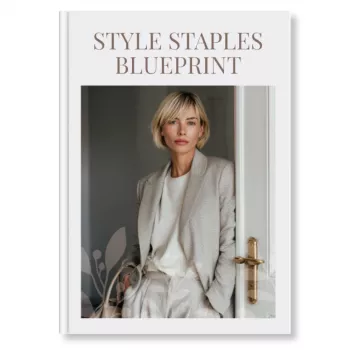
Add one occasion-ready piece to cover last-minute plans: a simple dress, a sleek top, or a matching set. Then lock in finishing pieces: a belt and an everyday bag that match most of your shoes and don’t compete with your palette. When you’re deciding what truly counts as an “essential,” a guided checklist can help. The Style Staples Blueprint digital guide is designed to make those choices clearer and more repeatable.
| Base outfit | Swap | Result |
|---|---|---|
| Tee + jeans | Add blazer | Instantly more polished |
| Blouse + skirt | Swap flats for low heel | More event-ready |
| Dress | Add belt | More shape and intention |
| Shorts + tank | Add linen button-up | Sun coverage and a styled layer |
The Style Staples Blueprint digital guide is built for anyone who wants a clearer definition of “essentials” and an easy way to apply that to real life—work schedules, weekend plans, and your comfort standards. It’s especially useful after a quick closet edit, once you’ve chosen your core colors and go-to silhouettes, because it helps turn those decisions into repeatable outfit structure rather than one-off purchases.
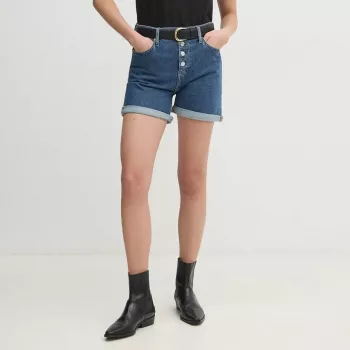
Warm-weather dressing is where a capsule can feel either effortless or frustrating—usually because of missing bottoms. A dependable pair of shorts anchors casual outfits with tanks, tees, and light layers. For an easy, everyday option, consider the Calvin Klein Jeans women’s blue cotton shorts for spring/summer rotation.
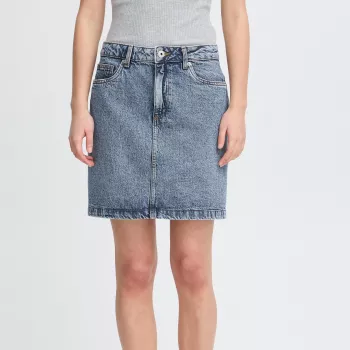
A versatile skirt is the other warm-weather MVP: it bridges daytime to dinner with a simple shoe swap. If your palette leans classic and you want a straightforward piece that pairs with tees, blouses, and cardigans, the Ichi women’s blue cotton skirt is an easy add-on that integrates quickly into capsule formulas.
A practical range is about 25–50 pieces (excluding workout and sleepwear), but climate, work dress codes, and how often you do laundry can shift that number. If you want a low-pressure start, build a 10–15 piece mini capsule for two weeks and adjust based on what you actually reach for.
Essentials are high-repeat foundations that support many outfits—think reliable tops, bottoms, layers, and shoes you’d wear weekly. Trends are optional accents; a simple rule is to buy a trend only if it pairs with at least three core items you already own.
Add variety through accessories, shoe swaps, and layering, and keep one or two accent colors in your palette for visual interest. Changing combinations (and occasionally the silhouette) keeps outfits fresh without adding more clothing.








Leave a comment