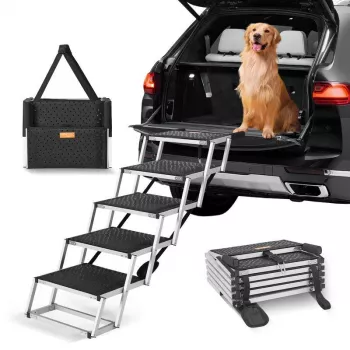
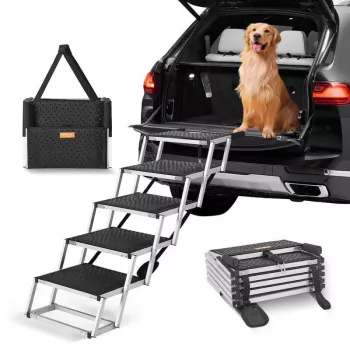
Getting a dog into an SUV, truck, or sedan can strain joints, trigger slips on wet bumpers, and turn every trip into a lift-and-twist moment. A 5-step folding stair set creates a steadier climb, helps protect hips and knees, and makes loading calmer for pets and simpler for owners.
Jumping up into a vehicle looks effortless—until it isn’t. Even healthy dogs can land awkwardly, and the risk goes up with taller cargo floors, slick surfaces, or tired muscles after a hike.
For overall travel safety tips—beyond just getting in and out—review guidance from the American Kennel Club (AKC), including securing pets and reducing distractions while driving.
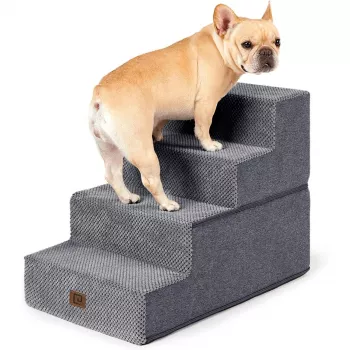
Not all “car stairs” are created equal. A shorter 2–3 step helper may work for compact sedans, but it can feel steep and shaky on taller vehicles. Five steps typically create a more gradual climb that matches how many dogs naturally move.
A folding design also helps with everyday convenience: open, set, load the dog, fold, and stash—without permanently sacrificing cargo space.
When stairs feel solid underfoot, dogs tend to commit to the climb. When they feel wobbly or slick, dogs hesitate—then try to jump anyway. Prioritize build quality and traction first, then consider the practical details that make daily use easier.
| Feature | Why it matters | What to verify |
|---|---|---|
| Grip on steps | Prevents slipping during entry/exit | Textured or traction-friendly step surface |
| Non-slip base | Keeps stairs from sliding away from the bumper | Rubberized feet or stabilizing base |
| Adequate height & number of steps | Reduces steep climbing angle | Fits the vehicle’s cargo-floor height |
| Weight capacity | Safety margin for larger dogs | Rating higher than the dog’s weight |
| Folded size | Fits in trunk or backseat | Stored dimensions match available space |
| Ease of cleaning | Mud and hair build up quickly | Wipeable surfaces or easy shake-off |
Even well-made stairs need correct placement to stay predictable under a dog’s weight. A stable setup also helps training go faster because your dog feels the same “platform” every time.
If your dog is older or has mobility limitations, it can help to discuss overall joint support and safe activity levels with your veterinary team. The American Animal Hospital Association (AAHA) provides owner education resources that can support those conversations.
The “right” stairs depend on how your dog moves—not just how much they weigh. Consider stride length, confidence, and whether your dog tends to rush or pause.
Yes when the stairs are stable, have good traction, and are rated above the dog’s weight. Place them on level ground, check for wobble, and introduce them slowly with a leash or harness for first practice.
It depends on folded dimensions and trunk/backseat space. Measure the storage area and compare to the folded size, and confirm the open height works for your specific door or hatch entry.
Start at home with the stairs against a low surface, reward one step at a time, and keep sessions short. Move to the car once the dog confidently climbs and descends without rushing.










Leave a comment