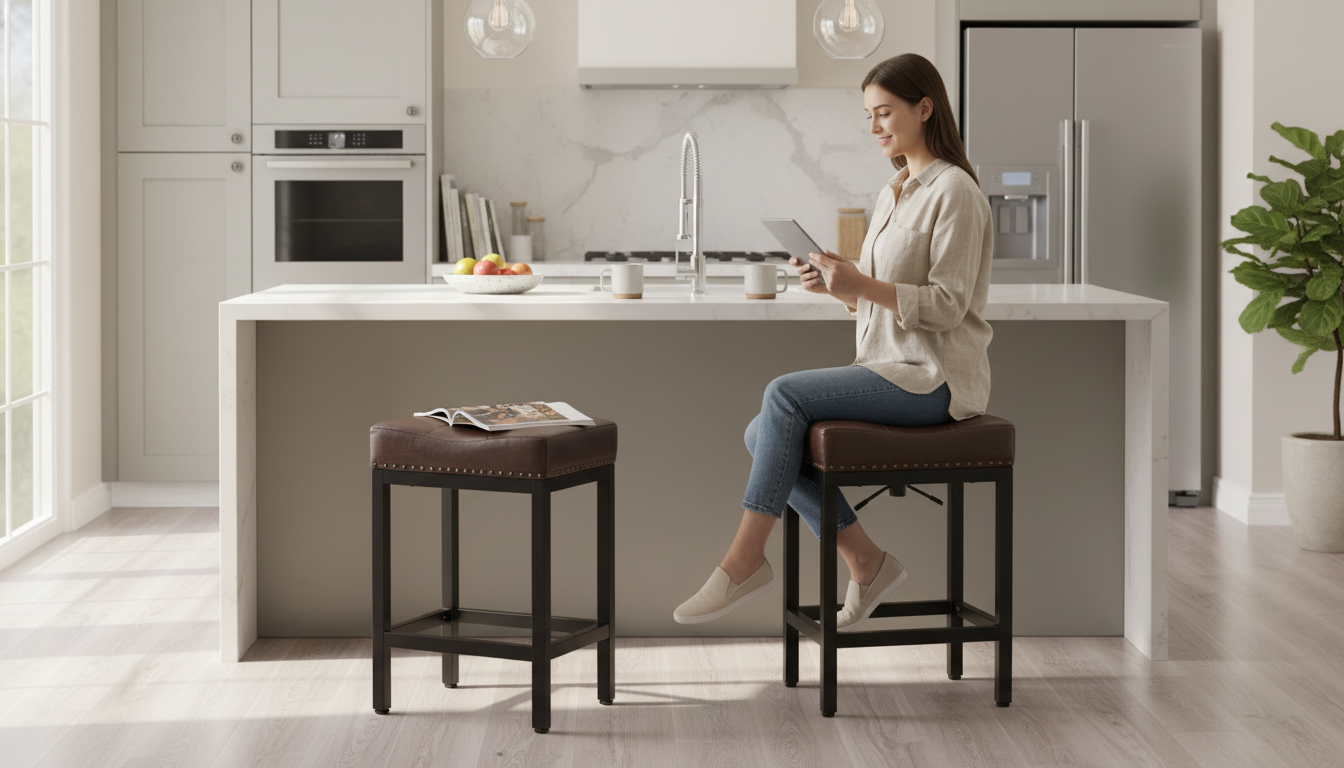
Saddle-style bar stools pair a contoured, ergonomic seat with a streamlined silhouette, making them a practical choice for kitchen islands, home bars, and multi-purpose seating areas. With a PU leather seat and a metal base, this style is designed for everyday life: quick wipe-downs after meals, reliable stability on hard floors, and height flexibility for different counters and users.
If you’re shopping for a set that looks polished but still works hard, start with a dependable, easy-care option like Saddle-Style PU Leather Adjustable Bar Stools with Metal Base, then dial in the right height range, comfort features, and base footprint for your space.
The saddle shape is the defining feature—and it’s more than a design trend. Instead of a flat seat that can create pressure points, a saddle-style seat contours to the hips and helps encourage a more natural, balanced posture. Ergonomics resources on neutral posture emphasize keeping the body supported and aligned for comfort over time; the saddle profile supports that goal for casual seating situations (see Cornell’s guidance on posture basics at Cornell University Ergonomics).
Beyond comfort, saddle stools tend to have a compact profile. That’s helpful in tighter kitchen layouts where bulky dining chairs crowd walkways or bump cabinet pulls. Visually, the combination of a simple seat and a metal base also blends easily with modern, industrial, and transitional interiors.
Bar stools live in “spill territory,” so surface choice matters. PU leather (polyurethane leather) is popular for kitchen and bar seating because it’s smooth and typically wipeable—less likely to absorb splashes than many woven fabrics. It’s a practical option for households that want the look of leather with simpler day-to-day maintenance.
On the structure side, a metal base can add rigidity and a steady feel, especially compared with lightweight frames. When evaluating build quality, check the product page for details such as seam stitching, padding thickness, and the finish on the base. Those small specs affect how the stool holds up to repeated use and how well it matches nearby hardware (matte black fixtures, stainless appliances, warm brass lighting, or mixed metals).
For broader safety and performance context, furniture standards organizations like BIFMA outline testing approaches that many manufacturers reference when engineering seating for durability.
Comfort is about more than “softness.” Look for cushioning that supports you for a realistic sitting window—often 20 to 40 minutes for coffee, casual meals, or kids’ homework at the island. A well-shaped saddle contour helps distribute weight more evenly, while adequate padding prevents the seat from feeling overly firm.
If the stool design includes a footrest (common on adjustable stools), it can noticeably reduce leg fatigue. At taller seating heights, a footrest helps prevent dangling feet and encourages a more stable, upright sitting position. For households that host often, prioritize a seat surface that wipes clean quickly and won’t show minor scuffs or smudges easily under everyday lighting.
Height fit is the difference between a stool that feels effortless and one that always feels “a little off.” Measure from the floor to the underside of the counter or bar top (not the top surface). A comfortable seat height typically leaves around 10 to 12 inches of clearance between the seat and the underside of the counter. That spacing provides legroom and makes it easier to shift positions.
Adjustable height is especially useful in homes with mixed surfaces (a standard counter plus a slightly taller island) or when multiple people share the same seating. Before ordering, confirm the stool’s minimum and maximum seat height so the range overlaps your target.
| Item to measure | Target guideline | Notes |
|---|---|---|
| Floor to underside of counter/bar | Defines the usable seat-height range | Measure at multiple spots if the surface overhang varies |
| Clearance from seat to underside | About 10–12 inches | More clearance can feel better for taller users |
| Stool seat-height range | Must overlap with the target range | Verify min/max seat height on the product page before ordering |
| Legroom and overhang depth | Enough knee space while seated | Consider stool base size and where feet naturally rest |
For general home safety reminders related to furniture stability, the CPSC’s furniture safety information is a helpful reference, especially in busy family spaces.
Measure from the floor to the underside of the counter or bar and aim for about 10–12 inches of clearance above the seat. Then confirm the stool’s minimum and maximum seat height so its adjustable range overlaps your target measurement.
Yes—most messes wipe up with a soft, damp cloth. For spills, use mild soap and water, then dry the surface to prevent streaks or residue; avoid harsh chemicals and abrasive pads.
Add felt pads or non-slip protectors suited to your flooring type and make sure the stool sits level. It’s also worth checking whether floor protectors are included or if you’ll need to purchase them separately.









Leave a comment