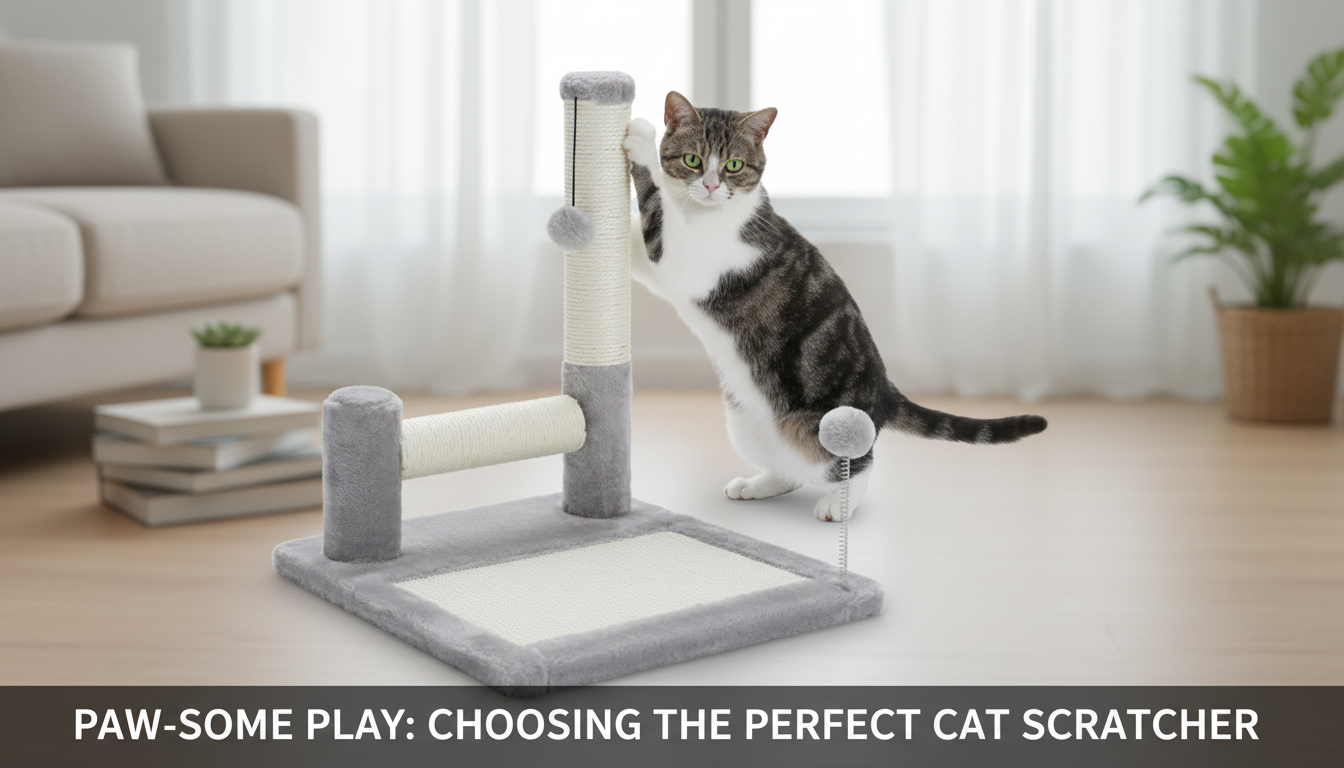
A sturdy scratch spot can protect furniture while giving cats a satisfying outlet for stretching, claw care, and play. This scratching post pad combines a flat base for stability, two sisal-wrapped posts for healthy scratching habits, and an attached play ball to keep daily activity interesting—ideal for apartments, multi-room placement, or adding a second scratch zone near favorite lounging areas.
Scratching is more than a “bad habit”—it’s a normal feline behavior tied to claw maintenance, stretching, and scent marking. A dedicated scratch station helps channel that instinct into a cat-approved spot, especially when it’s easy to access and fun to use.
For more detail on why cats scratch and how to guide the behavior, see ASPCA guidance on scratching behavior and International Cat Care’s scratching advice.
Not all scratchers feel the same to a cat. The best ones match what many cats naturally prefer—firm resistance, a scratchable texture, and a stable base that doesn’t scoot around when they dig in.
| Feature | Why it matters | What to check at home |
|---|---|---|
| Sisal posts | Supports healthy scratching and reduces furniture damage | Cat uses the post for 10–30 seconds per session without slipping |
| Stable base pad | Prevents tipping and builds confidence for timid cats | Unit stays in place on your flooring (tile, wood, carpet) |
| Interactive play ball | Encourages movement and quick play breaks | Cat bats the ball without dragging the scratcher away |
| Two-post layout | Gives options for different angles and paw placement | Cat switches posts or changes stance naturally |
Placement is often the difference between a scratcher that gets ignored and one that becomes part of a cat’s daily routine. Cats typically scratch where they already spend time—near paths they patrol, resting zones, or the exact corner of the couch that “feels right.”
If a home has multiple levels or separate hangout rooms, a compact scratch pad setup is especially helpful as a “satellite” scratcher—one that catches the urge before it lands on furniture.
Most cats will investigate a new scratch station, but a few simple steps can turn curiosity into a habit—without forcing it.
A helpful trick is to “prime” the station during your cat’s naturally active moments—after meals or during evening play—so the scratcher becomes part of the routine instead of a random new object.
A good scratcher should look a little “loved” over time. Regular maintenance keeps it inviting and helps it last longer.
Yes—sisal is commonly used for cat scratchers and is widely considered a safe, durable scratching surface. Monitor for loose, long strands as it wears, and replace the scratcher if it becomes heavily frayed to reduce the risk of a cat chewing and swallowing fibers.
Place the scratcher on a small rug or a non-slip mat, or position it against a wall or sturdy furniture edge so it can’t drift. Keeping the base and the floor clean and dry also helps reduce sliding.
Start by placing the scratcher directly next to the exact area your cat targets so it becomes the easiest alternative. Reward your cat for using it, and only move the scratcher gradually (a little at a time) if you want it in a different spot later.









Leave a comment