20W GaN USB‑C Fast Charger with PD & QC 3.0 for iPhone, iPad, and Everyday Devices
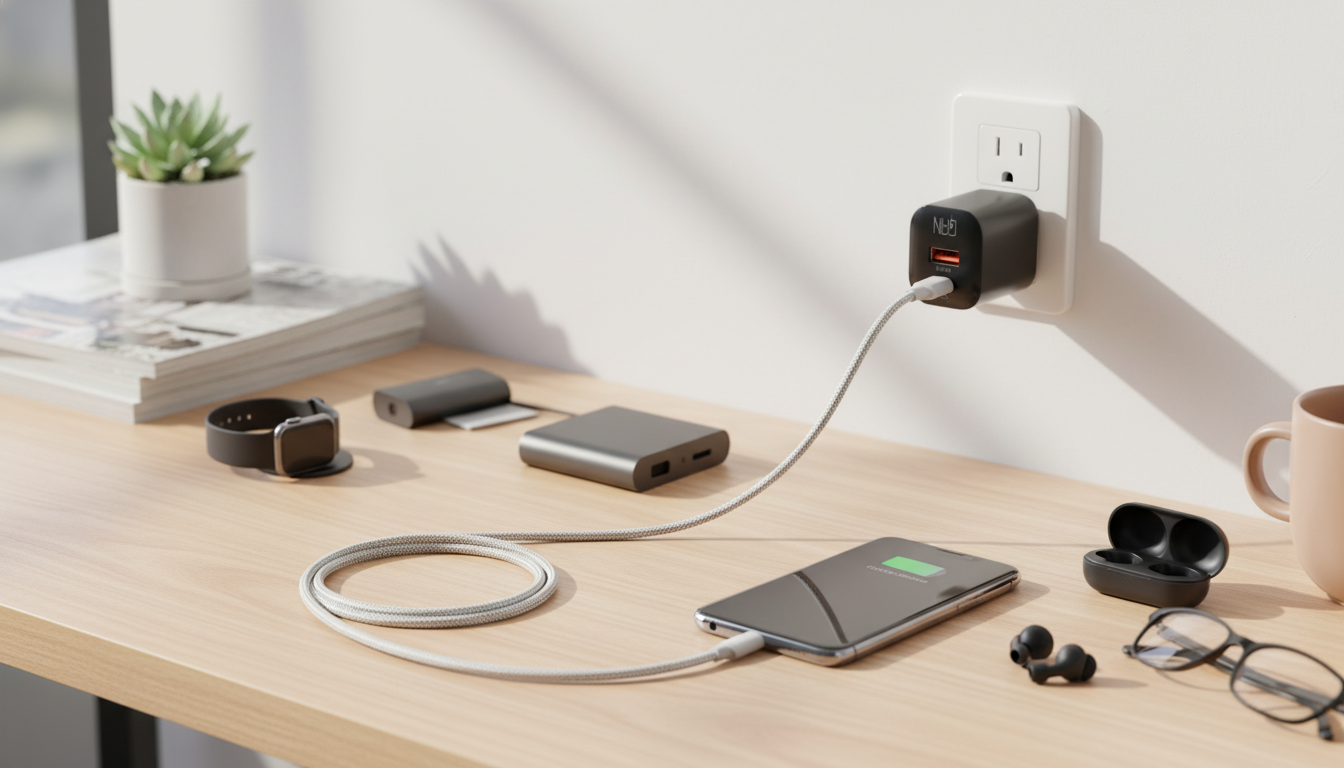
A compact 20W GaN wall charger can simplify daily charging by delivering fast, efficient power through a USB‑C port while supporting common fast‑charge standards like Power Delivery (PD) and Quick Charge (QC). The result is a small, travel-friendly brick that can replace older, slower adapters for phones, smaller tablets, and accessories—without hauling a bulky charger everywhere. Below is a practical guide to what 20W means for everyday use, which devices benefit most, and how to pair the charger with the right cable for reliable charging.
What a 20W GaN USB‑C charger is designed to do
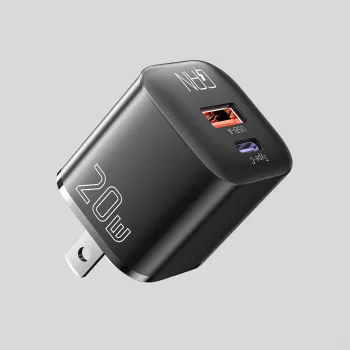
A 20W USB‑C charger is built to deliver up to 20 watts of power to compatible devices—typically smartphones, smaller tablets, and a wide range of USB‑powered accessories. Because it’s a single-port USB‑C design, it’s especially useful when you want one small charger that lives on a nightstand, stays at the office, or slips into a carry-on without adding weight.
- Provides up to 20W through USB‑C for phones, small tablets, and accessories
- Uses GaN (gallium nitride) technology to help reduce heat and physical size while maintaining efficiency
- Ideal for a simple “one small charger” setup for bedside, desk, or travel carry
Fast‑charge standards: PD vs QC 3.0 (and why both matter)
Fast charging isn’t just about wattage; it’s also about how the charger and device “agree” on a safe power level. Two of the most common systems are USB Power Delivery (PD) and Qualcomm Quick Charge (QC).
- USB Power Delivery (PD) is widely used for USB‑C fast charging across modern phones, tablets, and many accessories. More on the standard is available from the USB‑IF USB Power Delivery overview.
- Qualcomm Quick Charge (QC) is common on many Android phones and accessories; QC 3.0 support can improve compatibility. Qualcomm provides a high-level summary on its Quick Charge technology page.
- A dual‑standard (PD + QC 3.0) charger reduces “slow charging” surprises when switching between device brands
- Actual fast‑charge behavior still depends on the device, battery temperature, cable quality, and negotiated power profile
Compatibility overview: iPhone, iPad, Android, and more
Most daily devices will charge from a 20W USB‑C adapter, but the fastest speeds depend on the device’s preferred charging standard and the cable you use.
- iPhone: Fast charging generally requires a USB‑C PD charger and a USB‑C to Lightning cable for Lightning iPhones. Apple’s guidance is outlined on Apple Support: Fast charge iPhone.
- iPad: Many iPads benefit from USB‑C PD. USB‑C iPads typically use USB‑C to USB‑C cables for direct PD charging.
- Android phones: Many models support PD, QC, or manufacturer-specific methods; PD/QC support improves the odds of higher-speed charging across brands.
- Accessories: Earbuds, speakers, e-readers, handheld gadgets, and many power banks often charge fine at 5V, with faster modes depending on device support.
- Laptop charging: 20W is usually not enough for most laptops; some models may only maintain charge lightly (or not at all) depending on the workload and battery level.
What charging speeds to expect in real life
For phones, 20W is a meaningful upgrade over older 5W–12W adapters, especially when the phone supports PD or QC. Keep expectations realistic, though: charging speed changes throughout the session.
- Fastest at low battery: Many phones pull more power when the battery is low, then slow down as they approach a fuller charge to protect battery longevity.
- Heat can throttle charging: Warm rooms, thick cases, direct sun, or gaming/navigation while plugged in can reduce the rate to manage temperature.
- Cable quality matters: Worn, loose, or low-quality cables can cause slow charging, intermittent disconnects, or failure to enter fast-charge modes.
Setup tips for the best results (cables, outlets, and daily use)
Safety and reliability considerations for compact fast chargers
Specs snapshot and what each spec means
Quick reference: 20W GaN USB‑C charger details (verify exact labeling on the unit)
| Item |
What to look for |
Why it matters |
| Max power |
Up to 20W |
Enables fast charging for many phones and some tablets |
| Port type |
USB‑C |
Needed for USB‑C PD fast charging |
| Fast‑charge standards |
PD and QC 3.0 support |
Improves compatibility across iPhone/iPad/Android ecosystems |
| Cable requirement |
USB‑C to Lightning (Lightning iPhones) or USB‑C to USB‑C (USB‑C devices) |
A mismatched cable often causes slow charging |
| Best use cases |
Phone, small tablet, accessories, travel kit |
Right-sized power without carrying bulky adapters |
Who this charger is best for
Product picks available now
FAQ
Will a 20W USB‑C PD charger fast charge an iPhone?
Yes, a 20W USB‑C PD charger can fast charge an iPhone when paired with the correct cable—typically USB‑C to Lightning for Lightning iPhones. Charging speed varies as the iPhone manages power based on battery level and temperature.
Does QC 3.0 matter if charging an iPad or iPhone?
For Apple devices, USB‑C Power Delivery is the primary fast-charging method, so QC 3.0 usually doesn’t change iPhone or iPad charging speed. QC 3.0 is most helpful for compatibility with many Android phones and accessories.
Why is my phone still charging slowly with a fast charger?
Common causes include a non-fast-charge or damaged cable, a hot battery, a device that doesn’t support PD/QC, heavy background use (like gaming or navigation), or a weak wall outlet/power strip that causes power drops.
Recommended for you











Leave a comment