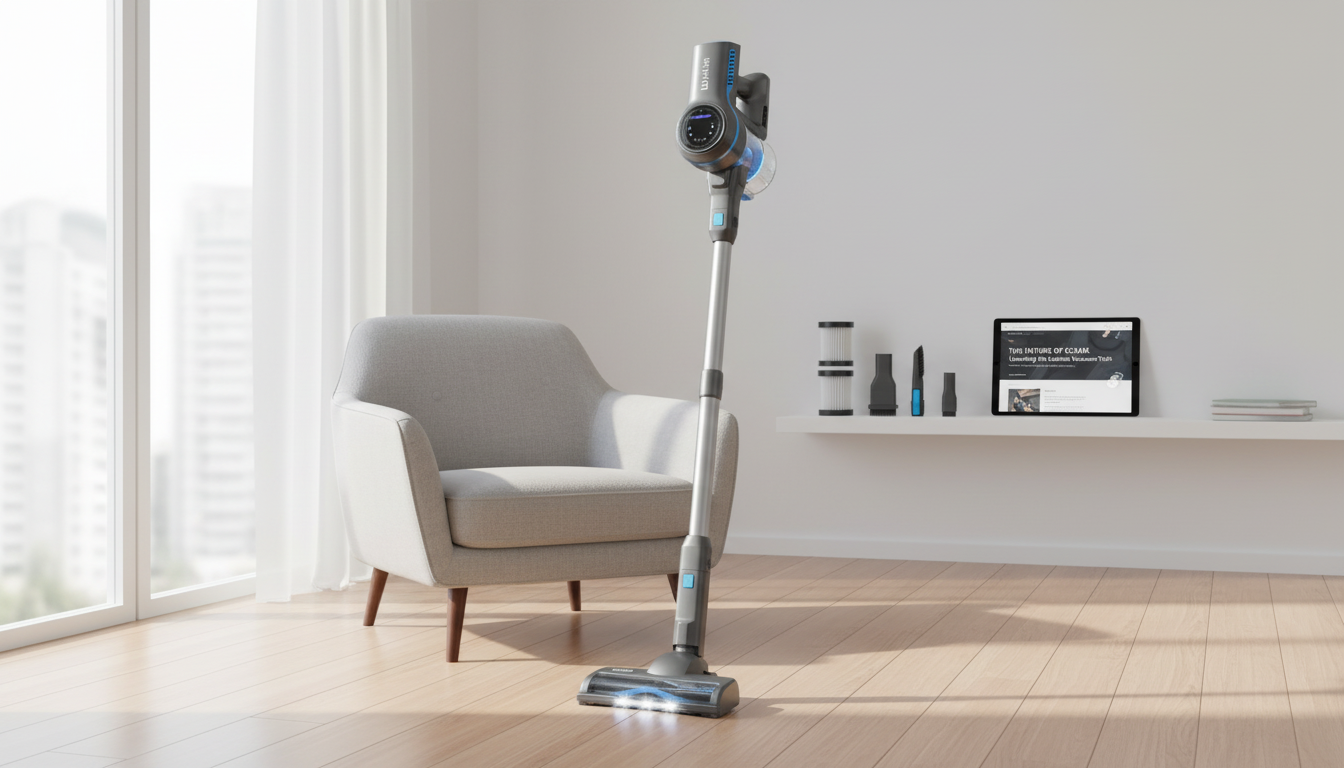
A cordless stick vacuum can take the place of quick daily sweeping, fast spot cleanups, and above-floor dusting—when it balances suction, battery life, and genuinely useful attachments. If you’re comparing models and see “25KPa suction” and “up to 45 minutes,” it helps to translate those numbers into what you’ll feel on hard floors, rugs, and upholstery. Below is a practical breakdown of what to expect, how handheld mode fits into real routines, and which habits keep performance steady over time.
KPa (kilopascals) is a measure of suction pressure—how strongly a vacuum can pull air. In daily use, suction pressure matters most when debris is slightly “stuck” (like grit pressed into rug fibers), when you’re cleaning along edges, or when airflow is restricted (like crevices and upholstery).
If indoor air quality is a priority, consistent airflow and filtration matter too. The EPA’s overview of indoor air quality is a helpful reference for why dust control and regular cleaning can make a noticeable difference, especially in high-traffic homes.
“45-minute max runtime” is typically measured under the easiest conditions: the lowest power mode, hard floors, a clean filter, and no clogs. Real homes introduce thicker rugs, heavier debris, and powered floor heads—all of which reduce runtime.
| Mode | Best for | Expected runtime range | Notes |
|---|---|---|---|
| Min / Eco | Hard floors, quick pickups, daily maintenance | Up to ~45 minutes (max) | Longest runtime; ideal for large open areas |
| Mid / Standard | Mixed flooring, crumbs, light pet hair | Moderate | Good balance for most homes |
| Max / Turbo | Rugs, embedded grit, upholstery, car mats | Shortest | Use in short bursts to preserve battery |
For additional context on choosing the right vacuum type and features, the Consumer Reports vacuum buying guide is a solid, plain-English overview of what tends to matter in real households.
A stick vacuum that converts into a handheld earns its keep in places that are annoying with a full-size upright: stairs, tight corners, and anything above the floor line.
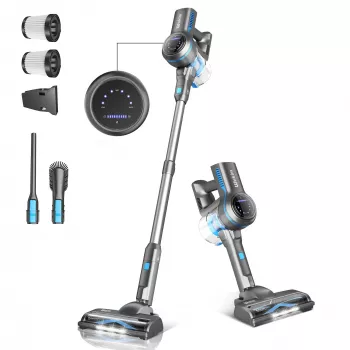
Attachments are what turn “handheld mode” into a real advantage. A crevice tool targets tight gaps along baseboards and seat rails, while a brush tool is safer on delicate surfaces like lampshades, vents, and window sills.
An LED display is most useful when it gives you information that changes how you clean in the moment. The best examples are simple, glanceable, and actionable.
Technique matters almost as much as power. Small adjustments—like slowing down on rugs or lowering power on hard floors—often improve pickup and extend runtime.
For general energy and efficiency considerations, the U.S. Department of Energy’s overview of vacuum cleaners is a useful baseline on how vacuums work and what affects performance.
The 45-minute figure typically reflects the lowest power setting on hard floors. Max/Turbo mode is significantly shorter and is best used in short bursts for rugs, entryways, and upholstery.
It can be effective for pet hair and low-to-medium pile carpets, especially with a well-designed brush roll. Keeping filters clean and using higher power on rugs helps maintain strong pickup.
Most LED displays show battery level and the current power mode. Some models also provide maintenance reminders, which can help you empty the bin and clean filters before suction drops.









Leave a comment